When evaluating alloy powder quality, is it sufficient to randomly open a single bag for testing? What constitutes a scientific, standardized sampling process, and what are the official protocols to follow? Today, technical experts from Sagwell delve into these critical questions.
Ultrafine alloy powders—particularly those with a particle size under 20 micrometers—are prone to agglomeration, dust emission, and static charging. Their chemical composition and particle size distribution may also be inconsistent, making strict adherence to sampling standards imperative.
Two primary international standards govern metal powder sampling practices:
Powders for Powder Metallurgy – Methods of Sampling
Its core tenet involves extracting multiple incremental samples from an entire batch, blending them into a comprehensive composite sample, and then subdividing it into test portions. The standard places strong emphasis on preventing segregation and contamination during all stages.
Standard Practice for Sampling Metal Powders
This specification outlines detailed procedures such as stratified sampling and container-based sampling, providing clear operational guidelines for practitioners.
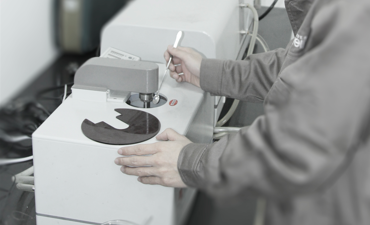
Sagwell's technical team further emphasizes that the sampling workflow itself is equally vital to accurate results.
First, sampling quantity: The minimum number of sampling points is determined by batch size. For instance, ISO 3954 mandates a minimum of 10 incremental samples per production batch.
Second, sampling locations: Samples must be collected from multiple positions within each packaging container, including the top, middle, bottom, center, and edge regions.
Additionally, sampling volume and pre-treatment vary by test item:
• For chemical composition analysis: Representative samples must be selected with rigorous contamination control; vacuum sealing is recommended when necessary.
• For particle size analysis (via laser diffraction or SEM): Post-sampling dispersion treatment—such as adding dispersants or applying ultrasonic waves—is required to eliminate agglomeration interference.
• For apparent density and tap density measurements: Sampling is performed directly using standard containers (e.g., via the Hall flowmeter method).
• For powder flowability testing: Only dry, non-agglomerated samples are suitable.
In conclusion, scientific sampling forms the bedrock of reliable alloy powder quality data. It requires adopting multi-point, stratified approaches to secure representative samples and implementing standardized pre-treatment based on specific test requirements. As a specialized supplier of ultra-fine materials, Sagwell not only delivers metal powders that comply with global standards but also guarantees exceptional batch-to-batch consistency tailored to clients’ unique application needs.
Please feel free to consult for more details.
Email: [email protected]


